
2episode · summary
School Attack, War and Migration: Where Is the Problem?
In the second circle we discussed three events from the news. All three led to the same question: is the problem the system, or people?
short answer
The answer from the circle: the three events share the same root, an uneducated human nature that thinks only of itself. Looking for the culprit in a single child, a single government or on the other side of a border doesn't solve the problem; neither does raising walls. Change starts with adults educating themselves first and, closest to home, with getting along with your neighbor.
Listenpodcast in Turkish · 38 min0:00 / 38:00
from the circle
School attack: what drives children to this rage?
The first topic was the armed attack a high school student in Thailand carried out first on his family, then on his school. The circle's answer: the responsibility can't be placed on a fourteen- or fifteen-year-old child. A proverb was recalled in the conversation: a child who doesn't feel love will set his own village on fire to feel that love.
- Adults must be educated first. A child first takes their mother and father, then those around them, as an example.
- Loneliness. Most young people who join online groups where such events are praised are looking there for the attention they don't get from their family.
- Trust. The child needs to be convinced that the adults around them are there for their good.
Bombed children's hospital: is lasting peace possible?
The second topic was a children's hospital in Kyiv bombed at night. Instead of blaming one side, the circle said this: the cause of wars isn't governments but human nature. As long as the "software" stays the same, even when rulers change only the faces change.
- A stone thrown into water. One person can't stop a war; but a person who corrects themselves starts to influence those around them.
- Starting closest to home. Before world peace, we need to see whether peace can be built in a small community.
Migration: should we raise the walls?
The third topic was the wave of migration reaching the Spanish city of Ceuta.
- Walls don't work. Those who can't share in prosperity feel anger toward those who have it; this cycle has happened again and again throughout history.
- Prosperity is either for everyone or for no one. Everything is connected and interdependent.
- Leaving isn't the solution. A person takes their uneducated nature wherever they go.
Why is there no full transcript for this episode?
The other episode pages include the edited full transcript of the conversation. This episode's topics are real events that cost lives. Because we don't want words to be quoted out of context, we've put this episode into writing as a summary. The whole conversation is in the video above, in Turkish; tap the timestamps next to the headings and the video starts from that moment.
Put people on Mars and the same problems would arise, because we're the same.
— from the circle, 35:30
Episodes close to this topic
-
 episode 7 · 16 min read · 26 min talkHow Should Human Relationships Be?How relationships shouldn't be, and how they should.
-
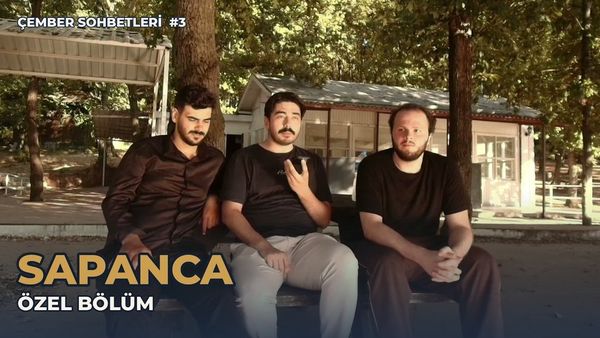 episode 3 · 17 min read · 21 min talkSapanca Special EpisodeLearning to get along, and the aim of these broadcasts.
-
 episode 5 · 12 min read · 18 min talkWhat Is the Circle Method and How Is It Practiced?The method for listening to one another.
circle rule
This conversation followed the Circle Method: no one interrupts anyone, there's no right or wrong, everyone speaks in turn.